Anthropology
Related: About this forum
220,000-Year-Old Quarry Site in South Africa Studied
April 8, 2026
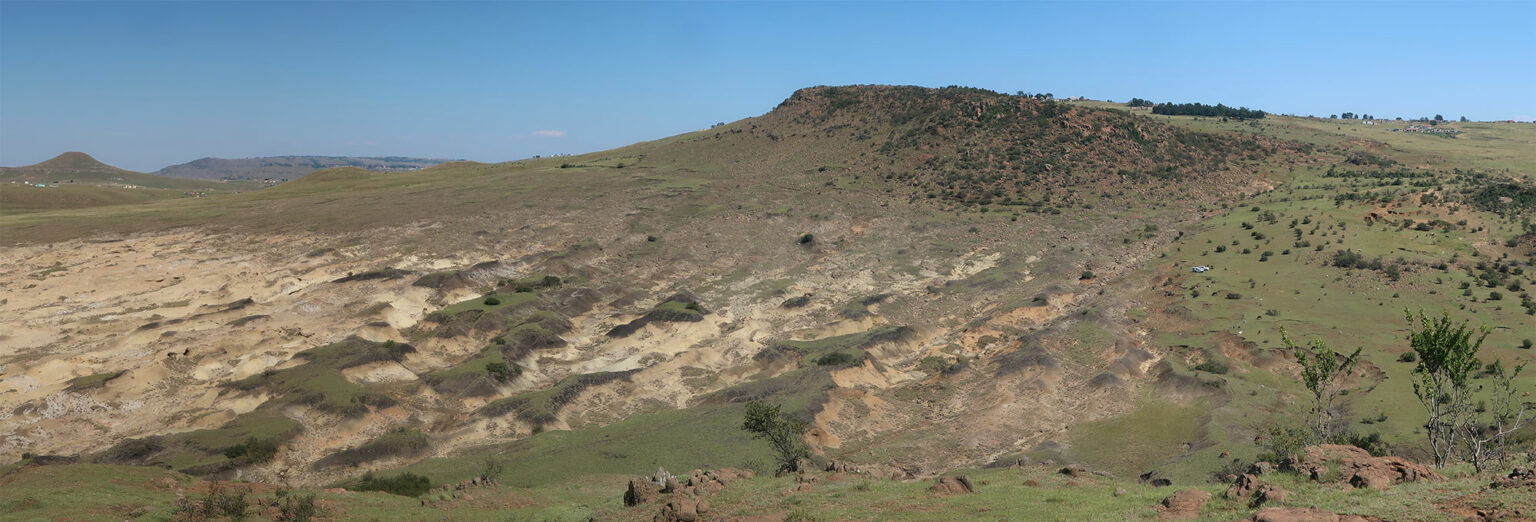
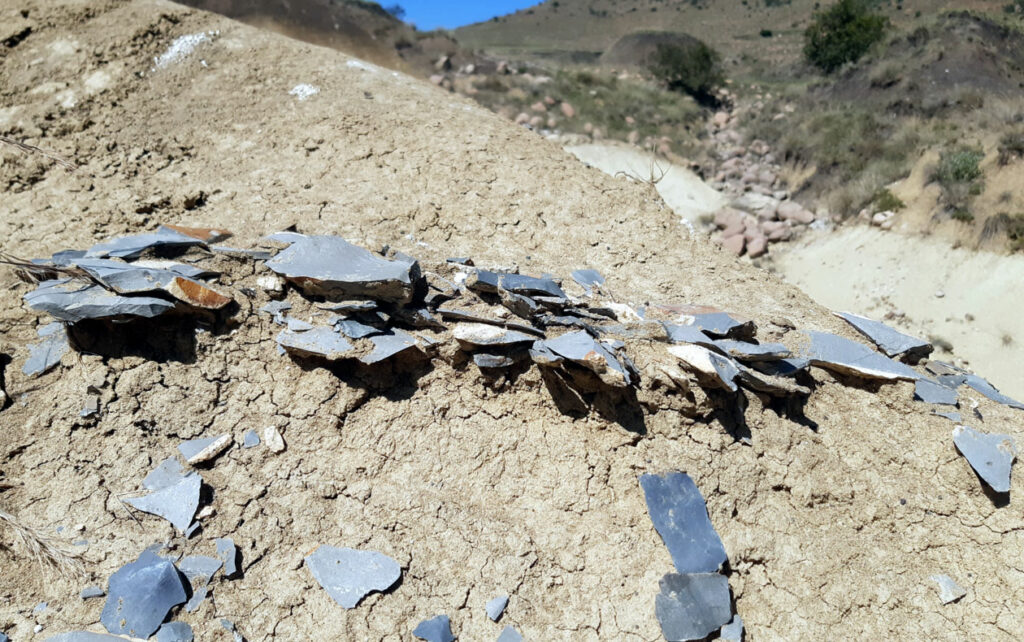
Visible accumulations of stone artifacts at the Jojosi site, South Africa
University of Tübingen/Manuel Will
TÜBINGEN, GERMANY—According to a statement released by the University of Tübingen, evidence of quarrying some 220,000 years ago has been discovered at the Jojosi site in eastern South Africa by a team of researchers led by Manuel Will of the University of Tübingen. It had been previously thought that early modern humans found stones for making tools incidentally as they looked for food. Team member Gunther Möller reassembled more than 350 rock fragments recovered from the site into “refits,” or stones that had been broken apart by knapping. “With these 3D puzzles, we were able to see precisely where and how material was chipped off and in what order,” Möller said. “Several of these puzzles together then allow us to draw conclusions about the form of the actual end product, before it was taken to another place,” he explained. The lack of tools or traces of other activities conducted at the site suggests that people traveled to Jojosi only to obtain the desired rocks. This practice continued for about 100,000 years, based on luminescence dating of the finds. Read the original scholarly article about this research in Nature Communications. To read about hunter-gatherers in southern Africa who traveled long distances some 40,000 years ago to obtain special stones for toolmaking, go to "Source Material."
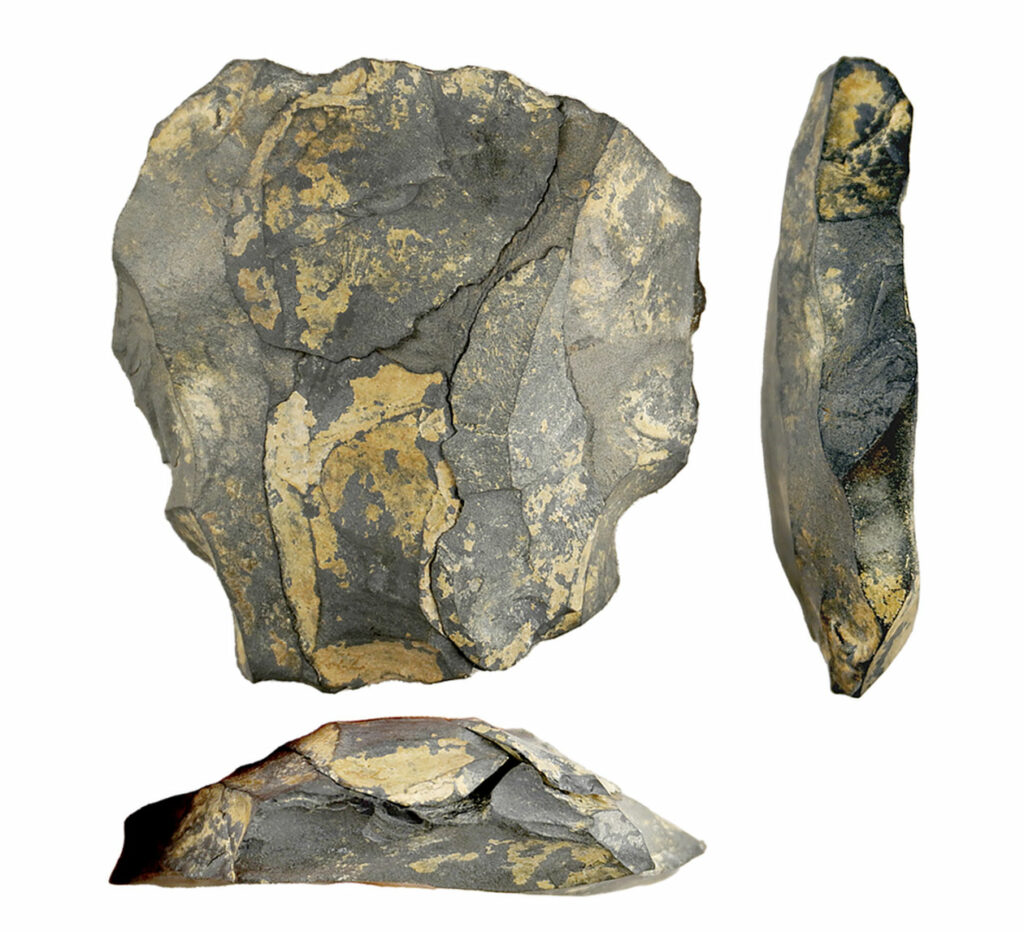
A reassembled stone artifact known as a refit found at the Jojosi site. The last three strikes made by a human knapper are visible in this 3D refit, which consists of four conjoining fragments.
University of Tübingen/Gunther H. D. Möller
https://archaeology.org/news/2026/04/08/220000-year-old-quarry-site-in-south-africa-studied/
- - - - -
Nature Communications:
Open access
Published: 07 April 2026
Specialised and persistent raw material procurement by humans in the Middle Pleistocene
https://www.nature.com/articles/s41467-026-70783-8
~ ~ ~
Source Material:
https://archaeology.org/issues/november-december-2025/digs-discoveries/source-material/
 = new reply since forum marked as read
Highlight:
NoneDon't highlight anything
5 newestHighlight 5 most recent replies
= new reply since forum marked as read
Highlight:
NoneDon't highlight anything
5 newestHighlight 5 most recent replies

MiHale
(13,069 posts)

OC375
(1,019 posts)In 220,000 years, there will only be our masonry left as well. No cars, writing or iPhones would leave a trace. What would they say about us, based on nothing but our rocks and their perspective? Would they even know we had the wheel?

3Hotdogs
(15,390 posts)The Romulans will wonder how it got there.

Warpy
(114,623 posts)and that Earth could still be dismissed as being mostly harmless.
(I see your geekdom and raise you a book series.)
As for the OP, they're finally sending people like soil scientists and botanists in there along with the translators and they've found a long history of soil improvement and concentration of food stock plants where they shouldn't be concentrated. The patterns followed what the people needed, not western style agriculture, so they had been missed for decades. The region is turning out to be a lot more complex than any earlier observers had anticipated.