Environment & Energy
Related: About this forum
The Use of Human Based Organoids in Toxicology Testing.
The paper to which I'll briefly refer in this post is this one: Bridging Toxicological Silos with Organoids: A Systems Approach to Human-Relevant Risk Assessment Na Zhao, Xiaojun Deng, Rui Dong, and Yanbin Zhao Environmental Science & Technology 2026 60 (13), 9831-9842.
I have worked in the pharmaceutical industry my entire adult life, and although I don't eat mammals and birds, I am aware that mammals in particular, have experienced great cruelty in the development of drugs which save human lives. It's a sad but necessary compromise in my view; others are free to disagree on this weakly moral position.
The science of molecular biology has been built, in part, on the lives of lab animals, but now that we live in its golden age, it may present a way out of the moral conundrum of its origins. To wit: It is now possible to culture most human tissue.
The toxicology of pollution, everything from cigarette smoke to the poisoned air we accept, major killers, had depended on animal testing.
Thus this article, for which I will not have much time to discuss, is encouraging, a path out.
From the introduction:
Innovative three-dimensional (3D) culture systems, including organoids, spheroids, and matrix-embedded cultures, represent an important step beyond conventional cell systems by better simulating the architecture and physiology of human tissues. (4) Among these, organoids have emerged as a transformative technology in both biomedical and environmental research. (5) Derived from pluripotent stem cells (PSCs), adult stem cells (ASCs), or primary patient samples, organoids self-organize into 3D structures that preserve organ-specific architecture, cellular heterogeneity, and functional activity. (6,7) Importantly, the cellular origin of an organoid fundamentally influences its toxicological relevance. PSC-derived organoids, generated from embryonic stem cells or induced pluripotent stem cells, (8) are especially powerful for modeling early developmental processes, lineage specification, and organogenesis. These features make them particularly suited for the studies of developmental and life-course toxicity. (9,10) However, PSC-based organoids often exhibit immature, fetal-like phenotypes, incompletely developed xenobiotic metabolism and transporter functions, and limited preservation of donor-specific epigenetic states. (11) As a result, their ability to model chronic, low-dose, or age-dependent exposures remains constrained. In contrast, ASC-derived organoids more faithfully preserve tissue-specific differentiation programs, mature metabolic capacity, donor-associated epigenetic and transcriptional landscapes, and currently represent the most widely adopted platforms in translational toxicology and disease modeling. (12) These attributes make ASC-derived organoids well suited for toxicological questions centered on adult organ function, including gastrointestinal, hepatic, renal, and endocrine responses to sustained exposures...
Some graphics:
A graphic on the history of organoid development:
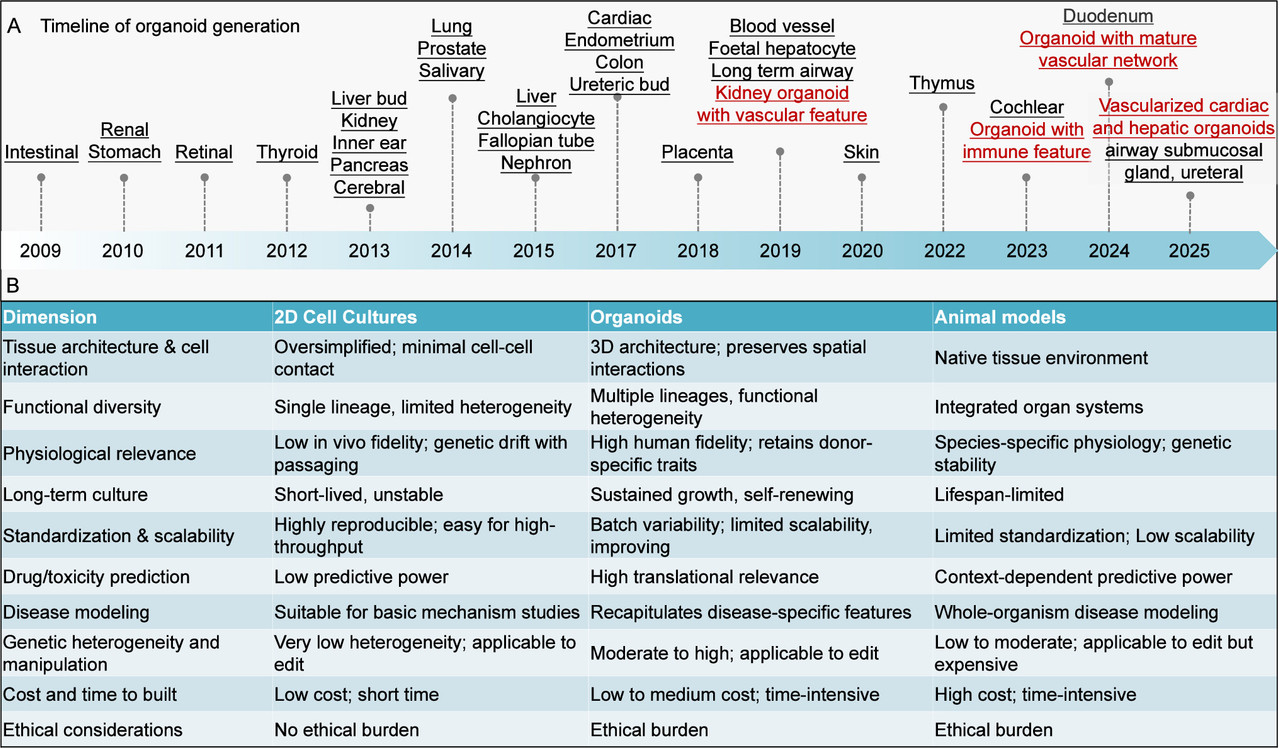
The caption:
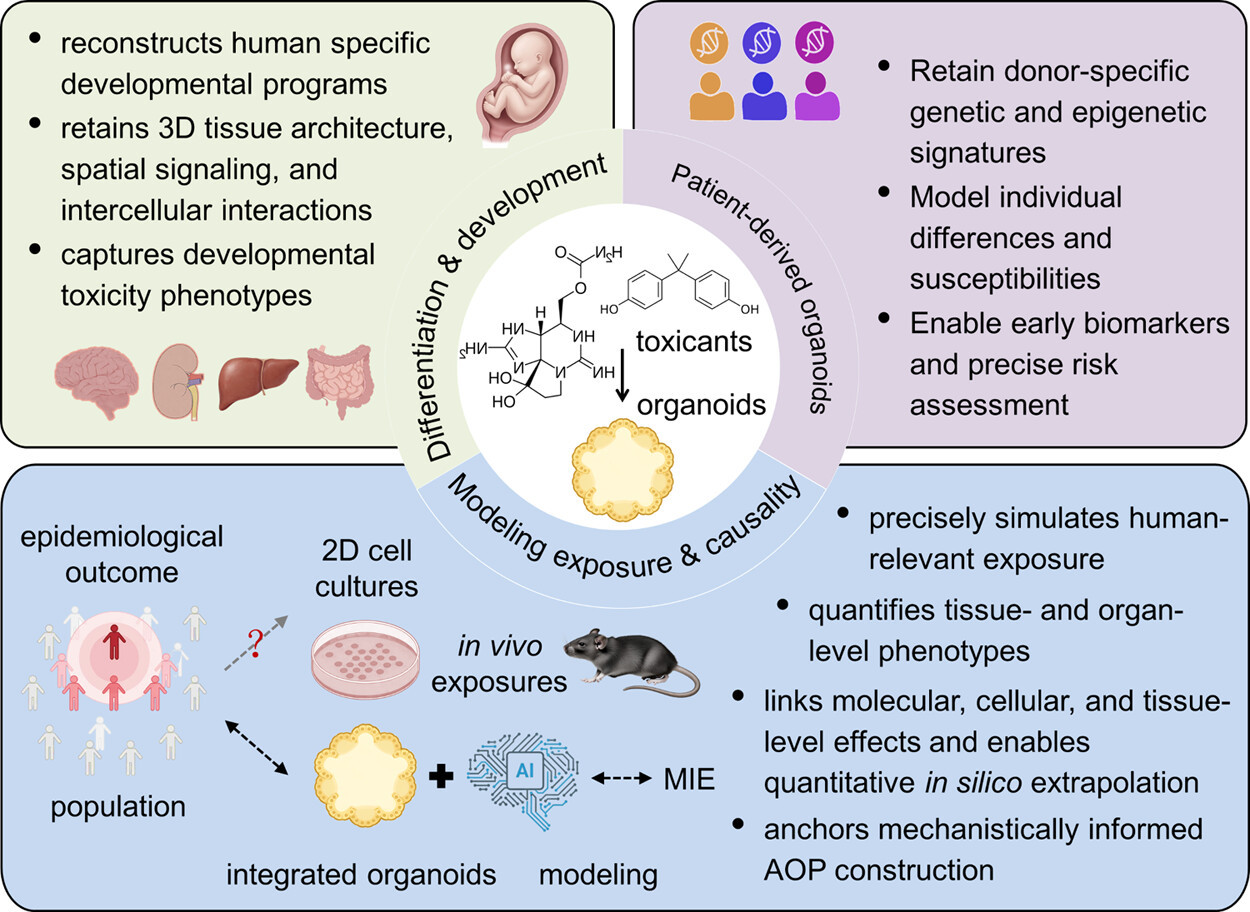
The caption:
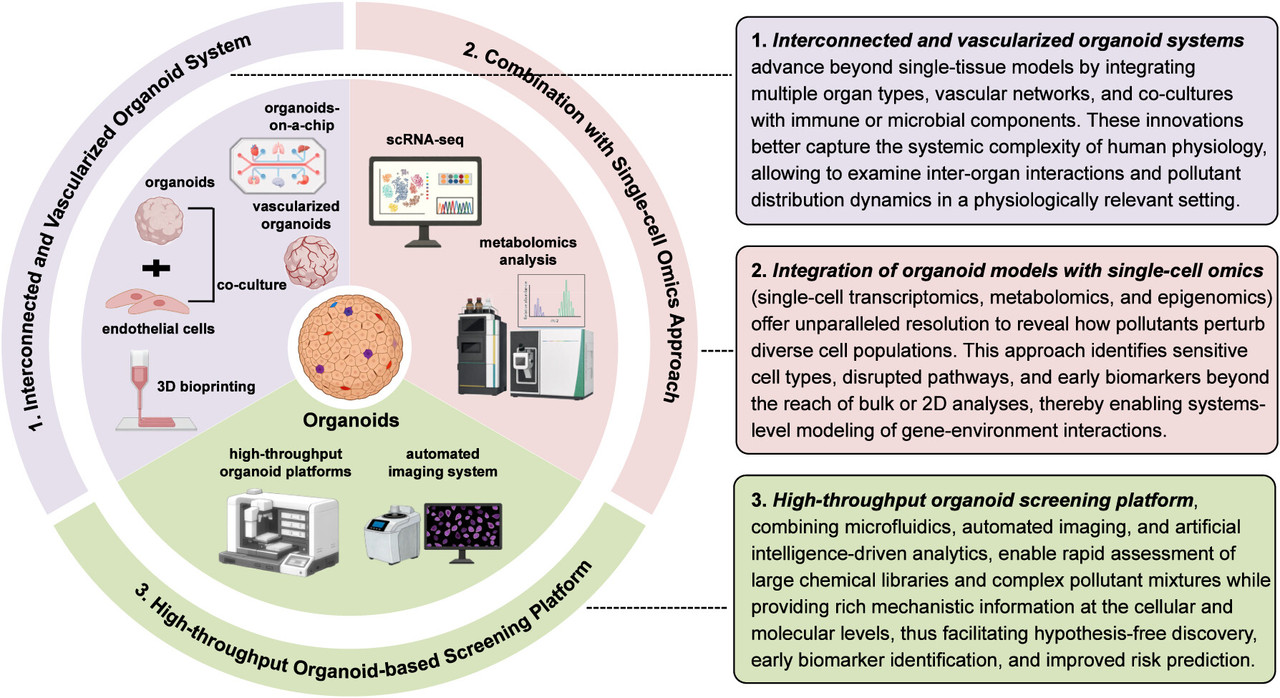
The caption:
Side note: The mass spectrometer in the diagram is an Orbitrap, a kind of minicyclotron. In theory they are great instruments, but in practice, kind of a horror story. I never meet anyone in the field who is happy about the service and support. If you're a scientist thinking of investing in one because you have big bucks in your budget, buy a TOF instrument from Waters or Bruker, or if you must have a cyclotron based instrument and can find the helium to keep it going, consider a Bruker FT-ICR instrument. At least in this area, the Thermo corporation sucks.
Anyway, this article is promising.
Another aside:
I am impressed that Chinese scientists, now that the United States has remarkably committed scientific and moral suicide to worship an orange ignorant pedophile, have active scientific programs that seem guided by an ethical stature. They do not live in a Democracy, regrettably, but apparently their leaders, for what its worth, although they are dictators are at least not ignorant dictators with no regard for the future of humanity. Their faults well know, they are better than we are.
Right now Chinese scientists are filling our best scientific journals. I'm an atheist, but will nonetheless say, "Bless them."